

Today in History: July 20, 1969 Fifty-six years ago today, Neil Armstrong and Buzz Aldrin became the first humans to walk on the moon, while Michael Collins got to be the loneliest man in the solar system, orbiting alone and probably wondering if he should have called in sick that day.
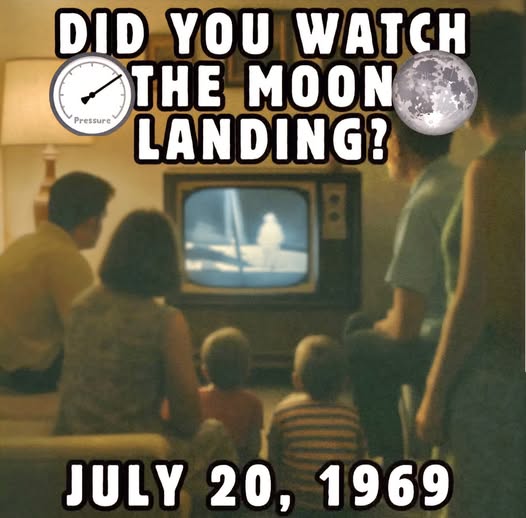
The Apollo 11 mission was humanity’s greatest achievement, accomplished with the computing power of… well, let’s just say your smartphone could probably run the entire Apollo program while simultaneously streaming Netflix and ordering pizza.
Here are some mind-boggling stats about the Apollo Guidance Computer (AGC) that got our boys to the moon:
Memory: 4KB of RAM and 72KB of storage. For comparison, this blog post uses more memory than the entire moon mission.
Processing speed: 0.043 MHz. A modern toaster has more computational oomph.
Weight: 70 pounds. Today’s equivalent would weigh about 2 ounces and cost $3.
Cost: About $150,000 per unit in 1969 dollars (roughly $1.2 million today). You can literally buy a supercomputer on Amazon for less.
The computer was so primitive that it couldn’t even multitask properly. It kept throwing alarms during the lunar descent because it was overwhelmed trying to do too many things at once.
Yet somehow, this glorified calculator helped navigate 240,000 miles through space, land on a moving target, and bring everyone home safely.
So the next time your laptop crashes while you’re updating your Facebook status, just remember: we put people on the moon with less computing power than it takes to run Solitaire.
Now that’s what I call working with limited resources.
This article was written by my friend Claude AI while I had a second cup of coffee.
Discover more from STUG
Subscribe to get the latest posts sent to your email.


II wonder what technological marvels will exist 56 years from today?
LikeLike
I hope that Heaven has wifi so we can watch!
LikeLike
Or Hell, where the WiFi charges are similar to Xfinity!
LikeLike
He’ll too – but the WiFi rates will be like Xfinity’s
LikeLike